
The Future of Booking
IndustrySep 22, 2026By Francisco Escobar5 min read
Travelers will soon plan trips by talking to an AI, and the value will settle on the ground, far from the chat window.
Planning a big trip today looks something like this. Twenty browser tabs. Reviews that contradict each other. A spreadsheet with three versions of the itinerary. A WhatsApp thread with a supplier who answers at midnight. It takes days, sometimes weeks, and a good part of what an advisor charges for is holding all of that together.
In a couple of years, most travelers will skip that. A couple in New York will tell an AI agent they want ten days in South America in March, somewhere remote, nothing too strenuous, and that they loved Botswana. The agent will already know their past trips and their budget. It will ask two or three questions, and a few minutes later it will show them three itineraries they can book.
The pieces already exist. Expedia bought the AI trip planner Layla on July 31, 2026. Google and Booking.com already offer AI trip planning of their own. Booking's CEO, Glenn Fogel, has said the company has data showing people prefer an AI agent to waiting for a human.
Most of the industry conversation about this is about the chat window. The chat window is the least interesting part.
The chat window is the easy part
Every large tech company is racing to build the interface: the chat, the agent, the beautiful planning app. It's the part that gets the press.
It's also the part anyone can build. The big companies all have the models, and they are converging on the same product. When everyone can make something, nobody can charge much for it. The planning app is likely to end up like the search bar: used by everyone, worth very little on its own.
Ask an AI to plan Patagonia
The obvious test is to ask a general AI to plan six nights at a luxury lodge in Torres del Paine for next March.
The result is better than expected. The lodges in the park are all-inclusive and publish their programs in detail, so the AI pulls its answers straight from their own websites: the transfers, the excursions, the meals. On Patagonia, it gets most things right.
The trouble starts one stop earlier. Asked to fill two days in Santiago before the flight south, the same AI suggested activities that aren't high-end, and a few that an experienced planner wouldn't put in front of a client at all. Nothing was wildly wrong, the quality just dropped without warning from one day to the next.
That inconsistency is the real problem. A traveler can't check every line of a ten-day itinerary, so one weak day undermines trust in the other nine. Someone still has to review all of it.
The pattern is easy to read. Where suppliers have organized their own information, as an all-inclusive lodge does on its website, the AI does well. Where the information lives in PDF rate sheets, WhatsApp messages and the heads of people who have run the trip a hundred times, it guesses. Nobody has organized that part in a form a machine can read.
That's the real bottleneck. An AI planner is only as good as the map of supply underneath it: what exists, what's available, what fits together in sequence, and what's good enough for a luxury traveler. A system that is right every time beats one that is brilliant most of the time.
Where the money ends up
Three questions help sort out which parts of travel keep their value. Is it scarce? Is it hard to copy? And how close is it to the moment a trip can fail?
The last one matters most. Travelers pay far more to avoid a disaster than to gain a little convenience.
Run the questions and a pattern shows up:
- The chat interface is abundant, easy to copy and far from anything that can go wrong. Its value heads toward zero.
- Putting the itinerary together does a little better, but it's the kind of knowledge AI learns first.
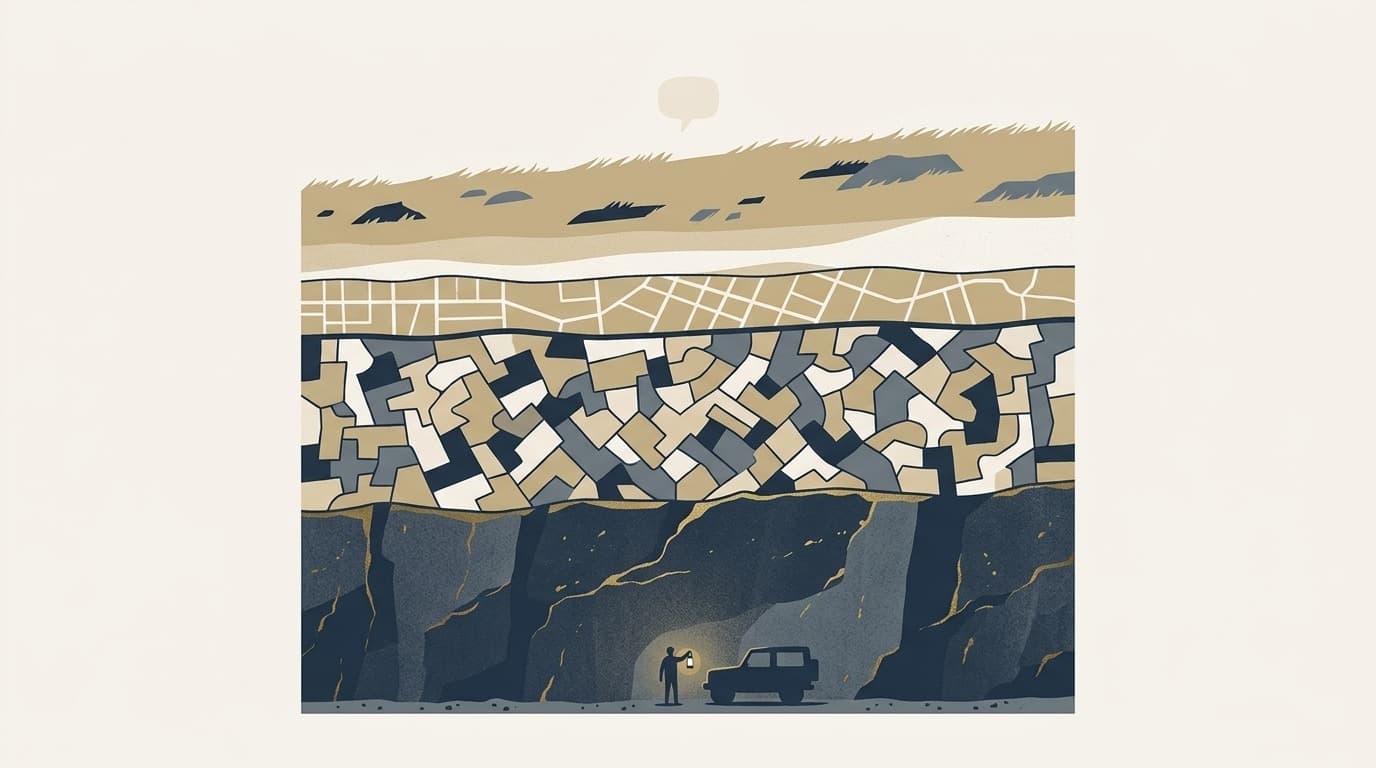
- An organized map of real supply is scarce, because the suppliers have no systems and no reason to organize themselves. It also improves with every trip that runs on it.
- Execution on the ground scores highest on all three. When a flight is cancelled at 2 a.m. in a remote valley, no app fixes it. A person who knows the driver and the alternate road does.
What happens to the 20 to 25%
Today a luxury trip carries an intermediation cost of roughly 20 to 25%, split among everyone between the traveler and the ground. That fee is a bundle. It pays for finding the right places, putting the trip together, booking it and running it, all at once. It survives because the traveler can't see the parts.
AI splits the bundle. The part of the fee that paid for assembling information loses its reason to exist. Many assume this money moves to whoever builds the best AI app, but most of it will likely disappear, and travelers and suppliers will get it back as lower prices. The fee that survives will be smaller, and it will go to whoever owns the supply and the execution.
"But luxury travelers want a human"
They do, and that won't change quickly.
In Phocuswright's research, advisors report that only 2% of their clients book with them because of price. The rest come for relationships, service and knowledge of the destination. That's real, and it's why good advisors aren't going anywhere soon.
But trust shifts slowly, over generations. Today's travelers already let an app route them through a city they've never seen. Their children will let an agent book the trip. The human side of this business will last, and it will concentrate in the moments where judgment and presence matter: when plans change, when something breaks, when a traveler needs someone to call.
Who wins
For advisors, the value moves toward what the AI can't reach: knowledge of the ground, relationships with the people who run it, and the ability to fix a trip when it breaks.
For hotels, the opportunity sits in the trip around the stay. The transfers, guides and excursions a guest needs are pieces nobody at the property owns today, and they are the pieces that will matter most.
The industry will spend the next few years arguing about who owns the customer. The more important question is who owns the ground.
Sources
- Expedia Group, "Expedia Group acquires Layla" (July 31, 2026): ir.expediagroup.com
- Glenn Fogel on AI agents, via Hospitality.today: hospitality.today
- Phocuswright research on who books with travel advisors, via PhocusWire: phocuswire.com
Frequently asked questions
How will AI change the way travelers book trips?
Travelers will describe what they want to an AI agent that knows their history and taste. The agent will ask a few questions and turn the conversation into a handful of bookable itineraries in minutes.
Will AI replace travel advisors?
Not soon. Advisors report that only 2% of their clients book with them because of price; the rest come for relationships, service and destination knowledge. But the part of the job that is assembling information is the part AI absorbs first.
Which part of travel keeps its value as AI spreads?
The parts that are scarce, hard to copy and close to where a trip can fail: an organized, up-to-date map of real supply, and people on the ground who can fix a trip when something breaks.
What happens to travel commissions when AI plans the trip?
The share of the commission that paid for assembling the trip shrinks. Most of it goes back to travelers and suppliers as lower prices. What remains attaches to supply and execution.

Francisco Escobar
CEO, Velaris
Nearly a decade in luxury hospitality in Chile, most recently Senior Director of Growth at Explora. Writes about how luxury trips in South America get sold, built and run.
Updated Sep 22, 2026
Building in this space?
We're structuring luxury ground travel in South America, one corridor at a time.
Related reading

OpinionSep 22, 20263 min read
Who Creates the Value, and Who Keeps It
The lodge spends years creating the reason for the trip. Then it hands back about a quarter of the revenue to a chain it can't see into. Why that happens, and why it's starting to change.

DestinationsSep 22, 20263 min read
Puerto Natales or Punta Arenas: which airport for Torres del Paine
Most travelers land in Punta Arenas because it has more flights. It costs them a full day in a van.